
Technology
Apple’s New AI Health Study Is Research, Not a Medical Verdict
The company is studying how people use AI for health questions. Participation and optional health-data sharing deserve separate decisions.
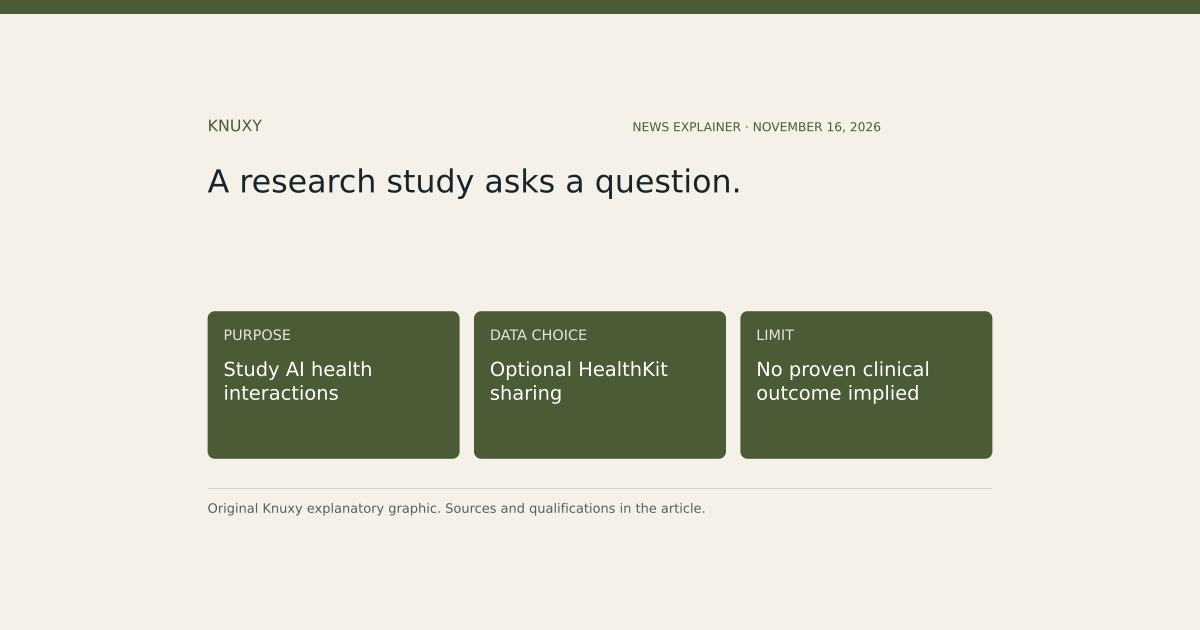
Apple announced a U.S. research study on November 15 examining how people use AI for health information. The company says the work will explore trust, comprehension, response quality and whether information helps people take action. An announcement that a study is starting is not a finding that the system improves health. [1]
Apple describes a virtual study involving OpenEvidence, with optional sharing of HealthKit information. It says study data will not be used to train AI models. Those are statements about the study's design and data handling, not results from a completed trial. [1]
Read the consent as a separate decision
The useful question is not simply whether AI sounds convenient. It is what a participant is being asked to contribute and what they expect in return. Before enrolling, read the actual consent document: which information is collected, who receives it, what optional sharing changes, and how withdrawal works.
This is our reading framework, rather than a claim that any particular answer is hidden in the study. A short announcement cannot substitute for the terms a participant agrees to.
Keep research and care distinct
Apple says the study is not intended to diagnose or treat conditions or replace a medical professional. That limitation matters even when an answer is fluent and reassuring. The ability to produce understandable text and the ability to establish the right clinical conclusion are separate questions. [1]
The news is a substantial research effort, not permission to treat an AI response as a diagnosis. The worthwhile follow-up will be published methods and results: what was measured, against which comparison, and with what limitations. Those details will be more informative than the size or ambition of the announcement alone.
Sources and editorial note
[1] Apple: AI health research study, November 15
Sources checked November 16, 2026. This AI-assisted briefing uses linked sources and distinguishes documented facts from editorial analysis. No firsthand interviews or product testing are claimed. The illustration is an original Knuxy explanatory graphic. Follow the linked official guidance for current recall, safety or availability details.
More to explore
Technology
Xbox Project Helix: A 2027 Developer Milestone Is Not a Console Release Date
Xbox’s anniversary coverage renews interest in its next system. The published plan distinguishes developer hardware from a consumer launch.

Technology
Caller ID Should Have to Prove Itself
Caller authentication already exists. Closing its gaps matters more as cloned voices make familiar calls harder to trust.
Consumer Watch
What doTERRA’s “Certified Pure” Label Actually Means
doTERRA’s holiday collection carries its company-created purity designation. Here’s how to distinguish testing, safety and health claims.