
Technology
Your Appliance Should Be Repairable. Ask Before You Buy.
A repairable appliance is easier to own. What the lightbulb cartel proves, what it does not, and the questions to ask before buying.
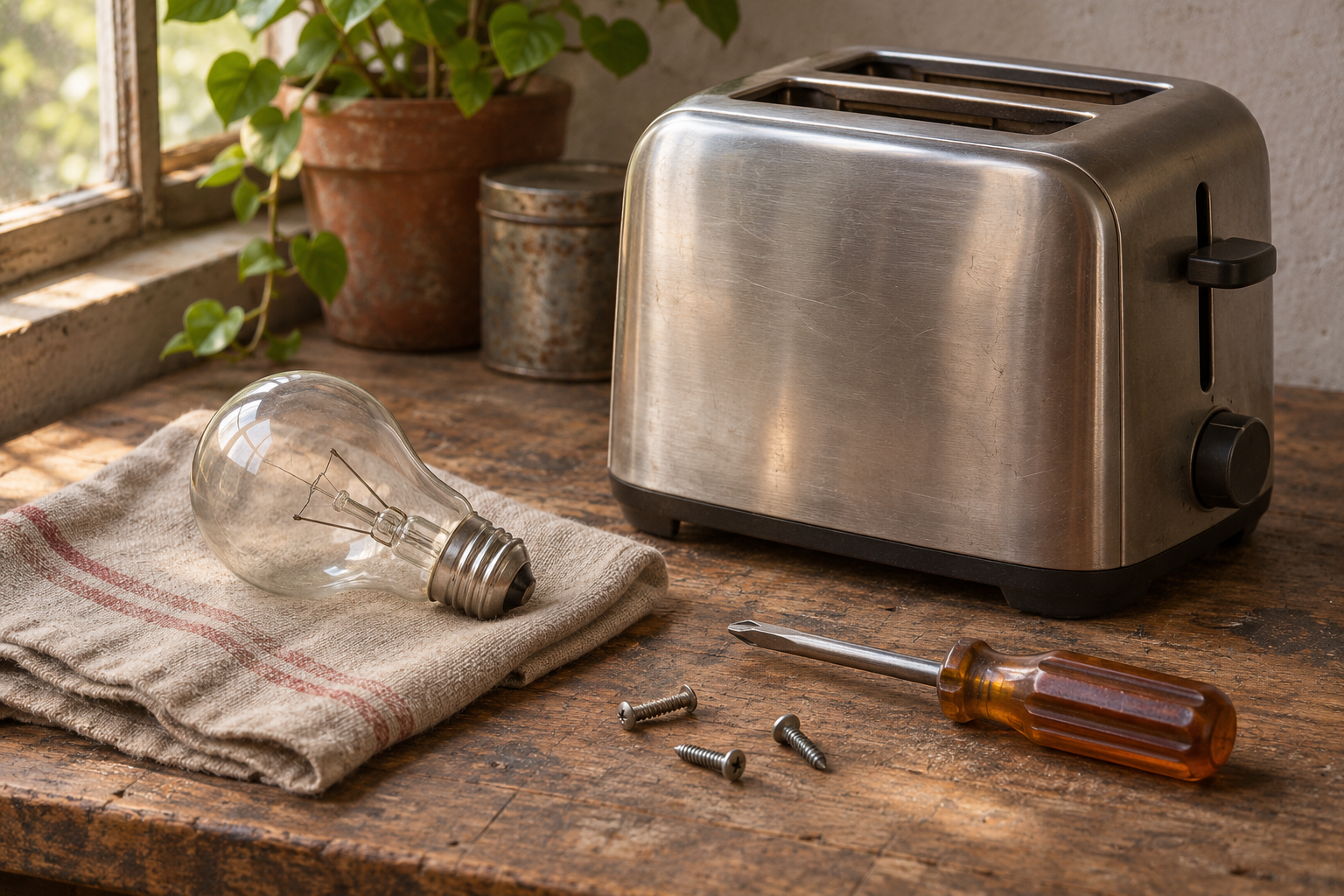
The most expensive feature on an appliance may be the one you cannot see in the showroom: whether anyone can fix it when a modest component gives up. Stainless steel photographs well. An obtainable replacement switch is less glamorous, right up until it becomes the only thing standing between you and another purchase.
Repairability deserves to sit beside capacity, energy use, and price in the buying decision. That argument does not require believing every broken dishwasher was programmed to betray you. It requires asking manufacturers to make ownership last beyond the sales pitch.
The lightbulb cartel was real. It is not evidence against every appliance.
In his archival research published by IEEE Spectrum, historian Markus Krajewski documented the Phoebus cartel, established in 1924, and its move toward a 1,000-hour standard for household incandescent bulbs. Manufacturers tested samples against that target. He describes correspondence and financial penalties associated with the system. This was coordinated commercial behavior, not simply customers noticing that a bulb had failed.
That distinction matters. A century-old cartel does not establish that a refrigerator sold today has a deliberate death date. Nor does one indestructible machine in a relative’s basement prove that every appliance used to last longer. The machines that failed years ago are absent from that nostalgic showroom.
Ask for evidence before accepting a lifespan slogan
GE Appliances’ own support guidance declines to provide a dependable lifespan estimate, citing differences in use, environment, care, and maintenance. That is a manufacturer’s explanation, not an independent comparison of generations. It is still a useful reminder that a single age cannot diagnose an individual machine.
A serious claim that modern appliances universally fail sooner would need comparable products, measured failures, usage, and repair histories across time. This article does not establish that claim. What consumers can investigate now is whether a particular model has a practical route back into service.
In its 2021 Nixing the Fix report announcement, the FTC identified barriers including difficult-to-remove adhesives, restricted spare parts, and unavailable diagnostic software. The agency found little evidence supporting manufacturers’ broad justifications for repair restrictions. These are documented issues across repair markets; they are not a finding that every restriction on every appliance is unlawful.
Make the comparison before the machine breaks
Before buying, search the exact model number for an official parts diagram and replacement components. Can you find the door seal, rack, knob, filter housing, or other likely wear item? Is the component sold separately, or does obtaining it require purchasing a much larger assembly? Ask who can perform the repair locally and what a diagnostic visit costs.
A parts listing is useful evidence of availability today, not a guarantee of support ten years from now. Save the manual, model number, warranty terms, and any written support promises. If the answer to a basic service question is a sales brochure, keep asking.
Then compare complete costs. In a hypothetical case, a $250 repair that buys three additional years works out to roughly $83 a year before operating costs and further repairs. A $900 replacement lasting nine years works out to $100 a year on purchase price alone. Those assumed lifetimes are examples, not forecasts. Delivery, installation, disposal, utility use, and repair uncertainty can change the decision.
Keeping everything forever is not the goal
The Department of Energy’s kitchen-appliance guide emphasizes both purchase and operating costs, and recommends using EnergyGuide labels to compare energy use. Its 2021 guidance also warns that older refrigeration equipment can be expensive to operate. A repair decision should account for that trade-off rather than treating age as either a medal or a death sentence.
A reasonable repair quote should explain the failed part, labor, the condition of the rest of the machine, and what the repair will actually address. For electrical, gas, or refrigeration-system work, get the appropriate qualified help rather than turning a consumer-rights argument into an improvised workshop.
The standard manufacturers should meet is straightforward: explain how the product can be maintained, which parts will be available, and what support the owner can reasonably expect. Consumers should not need a conspiracy theory to demand a replaceable part. A machine can be beautifully designed and still be a lousy thing to own if every small failure sends the whole purchase back to the checkout.
Lead image: original Knuxy illustration. It depicts a conceptual repairability still life, not a product test or reporting visit.
More to explore

Technology
Caller ID Should Have to Prove Itself
Caller authentication already exists. Closing its gaps matters more as cloned voices make familiar calls harder to trust.
Technology
Europe’s Freezer Hacks Make Software Support a Grocery Problem
New refrigeration incidents at European supermarkets show why a machine’s useful life now depends on more than whether its compressor still runs.
Technology
My ThinkPad E16 Experience: Two Failures, One Expensive Question
Neal Connolly on an early replacement, another failure and why dependable ownership matters more than an attractive specification sheet.