
Technology
Voyager 1’s Light-Day Milestone Makes Distance a Communications Problem
NASA’s November 17 celebration offers a way to picture an extraordinary distance: about a day for light to travel one way.
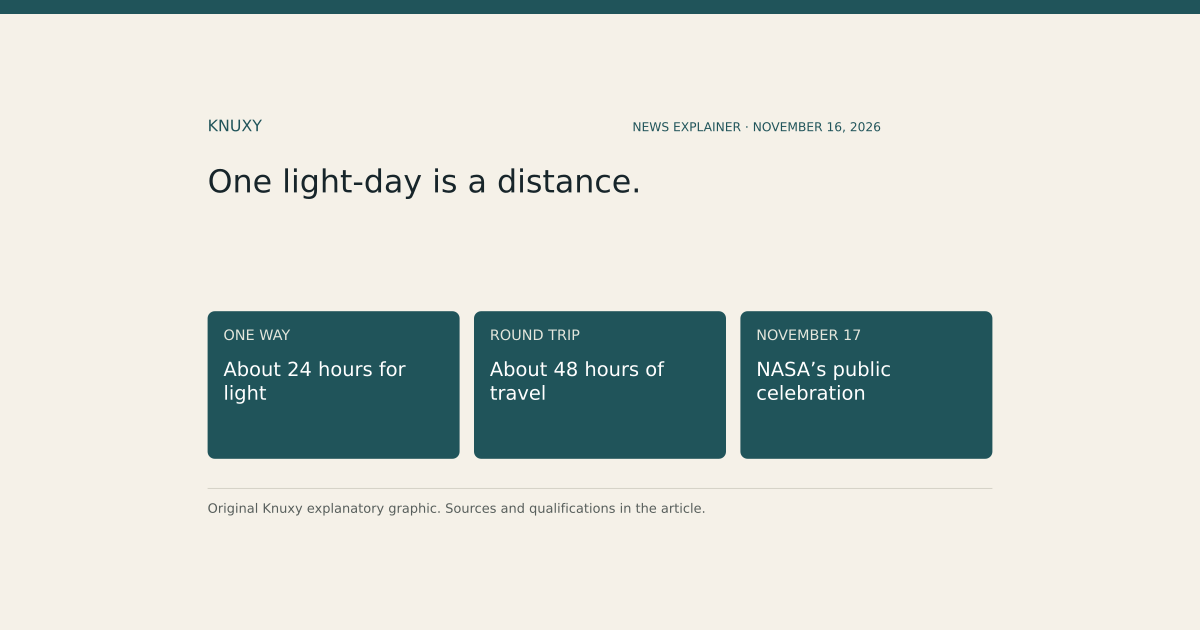
NASA is inviting the public to mark Voyager 1's one-light-day milestone on November 17. The agency's celebration asks people to shine a light after local sunset, a symbolic connection with a spacecraft approaching half a century of travel. It is a celebration, not a plan for household lights to communicate with the probe. [1]
The phrase “light-day” names a distance: how far light travels in a day. It is useful precisely because a very large mileage figure can become hard to picture.
Put the delay into ordinary terms
At a separation of one light-day, an outgoing radio signal takes about 24 hours to make the trip. A reply traveling back takes about another day, before allowing for the spacecraft's response or operations on the ground. The roughly 48-hour travel total is arithmetic, not a published timetable for an individual Voyager command.
Using the speed of light, one light-day is approximately 25.9 billion kilometers, or 16.1 billion miles. Those are rounded conversions of the unit, not a live tracking reading of the spacecraft at the moment you open this page.
A different kind of remote operation
NASA's mission pages document Voyager's continuing exploration beyond its original planetary encounters. [2] Our perspective is that the anniversary is also a lesson in patience: an operations team cannot treat such a spacecraft like a device on a nearby network.
That makes the celebration's small gesture unusually fitting. A light switched on after sunset is immediate for the person standing beside it. The milestone being celebrated is the enormous interval between sending something and knowing it arrived. Follow NASA's mission updates for operational news; enjoy the light-day event for the scale it makes visible.
Sources and editorial note
[1] NASA: Shine Bright for Voyager’s Light-Day
[2] NASA: Voyager mission overview
Sources checked November 16, 2026. This AI-assisted briefing uses linked sources and distinguishes documented facts from editorial analysis. No firsthand interviews or product testing are claimed. The illustration is an original Knuxy explanatory graphic. Follow the linked official guidance for current recall, safety or availability details.
More to explore
Technology
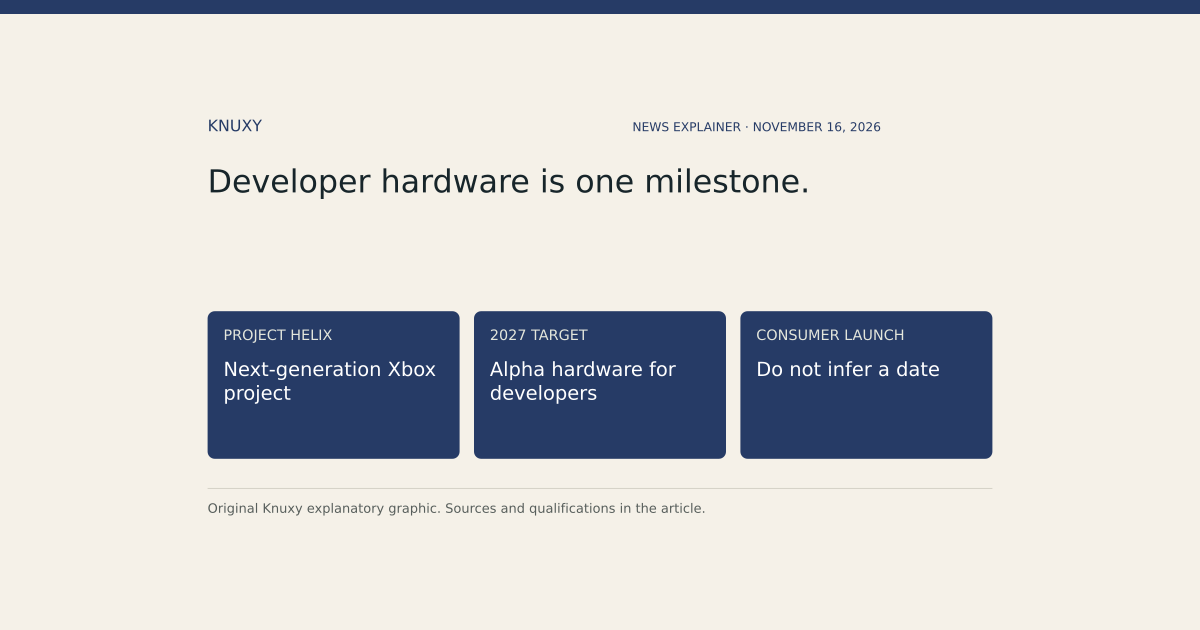
Xbox Project Helix: A 2027 Developer Milestone Is Not a Console Release Date
Xbox’s anniversary coverage renews interest in its next system. The published plan distinguishes developer hardware from a consumer launch.

Technology
Caller ID Should Have to Prove Itself
Caller authentication already exists. Closing its gaps matters more as cloned voices make familiar calls harder to trust.
Technology
Europe’s Freezer Hacks Make Software Support a Grocery Problem
New refrigeration incidents at European supermarkets show why a machine’s useful life now depends on more than whether its compressor still runs.