Lifestyle
Check the Bottom of the Bottle: Whole Foods’ Ashwagandha Recall Explained
One lot of 365 ashwagandha capsules is recalled for potential Salmonella contamination. Check the bottle’s bottom, and keep the recall separate from wellness claims.
Before debating a supplement’s wellness promises, check the bottle. In this recall, the small print matters more than the front-label pitch.
Vitality Works’ October 30, 2026 announcement, posted by FDA and rechecked November 3, recalls one lot of 120-count 365 Whole Foods Market Standardized + Full Spectrum Blend Ashwagandha capsules for potential Salmonella contamination. This is an ongoing cabinet check, not a new announcement today. Read the original notice.
Check the lot, then follow the remedy
Lot: 2025-26227
Expiration: 10/13/2028
Where to look: the bottom of the bottle
The notice says the product was sold nationwide in Whole Foods stores and online through Amazon. Its instruction is specific: do not consume the recalled product; discard it and do not return it to the store. Refunds are available at any Whole Foods Market store. Check the identifiers and instructions here.
Photograph the identifying information before disposal so you have it available when asking about the refund. If the printing is unreadable or you cannot establish whether your bottle matches, contact the company using the details in the notice. A matching herb name alone is not a lot-level identification. For a household with several supplements, match each bottle separately rather than relying on packaging color or a remembered purchase.
Vitality Works reported no illnesses as of its October 30 announcement and said routine sampling of one retail unit identified the potential contamination. That dated statement is not a guarantee about every subsequent day or every bottle. See the company’s account.
The practical distinction is simple: checking a recall is a product-identification task. Debating whether an ingredient is fashionable, traditional or worth buying does not answer whether this bottle belongs in the affected lot.
Two different safety questions
A contamination recall and an ingredient’s benefits are separate questions. A study suggesting that an ingredient might help with a particular problem cannot clear a contaminated batch. Equally, one recalled lot does not establish that every product containing that ingredient has the same contamination.
The National Center for Complementary and Integrative Health says some ashwagandha preparations may help with insomnia and stress, while evidence about anxiety is unclear. It notes that many studies are small and use different preparations. That qualification matters: evidence about a preparation in a study is not a universal performance certificate for every bottle bearing the herb’s name. Read NCCIH’s evidence summary.
NCCIH also says long-term safety is insufficiently established, identifies possible medication interactions, and advises avoiding ashwagandha during pregnancy and not using it while breastfeeding. Discuss supplement use with your health care provider, particularly when medicines or existing conditions are involved. Those are broader ingredient considerations, separate from this lot’s recall instructions. See the safety section.
Wellness shopping gets less confusing when those questions stay separate. First establish whether the actual product is recalled. Then, independently, consider whether the ingredient and preparation make sense for your circumstances. The label’s mood is not a substitute for either check.
If you already took it
Taking a capsule does not by itself diagnose an infection. CDC lists diarrhea, fever and stomach cramps among Salmonella symptoms. It advises calling a doctor for diarrhea or vomiting lasting more than two days, bloody stool or urine, fever above 102°F, or signs of dehydration. These are general symptom guidelines, not evidence that a particular person’s symptoms came from this supplement. Read CDC’s symptom and care guidance.
Keep the product details available if you seek medical advice. A clear photograph and an accurate timeline are more useful than a broad claim that a brand, an herb or an entire supplement aisle is unsafe. The immediate job is narrower: identify the bottle, follow the recall, and get appropriate help if symptoms warrant it.
More to explore
Consumer Watch
What doTERRA’s “Certified Pure” Label Actually Means
doTERRA’s holiday collection carries its company-created purity designation. Here’s how to distinguish testing, safety and health claims.
Consumer Watch
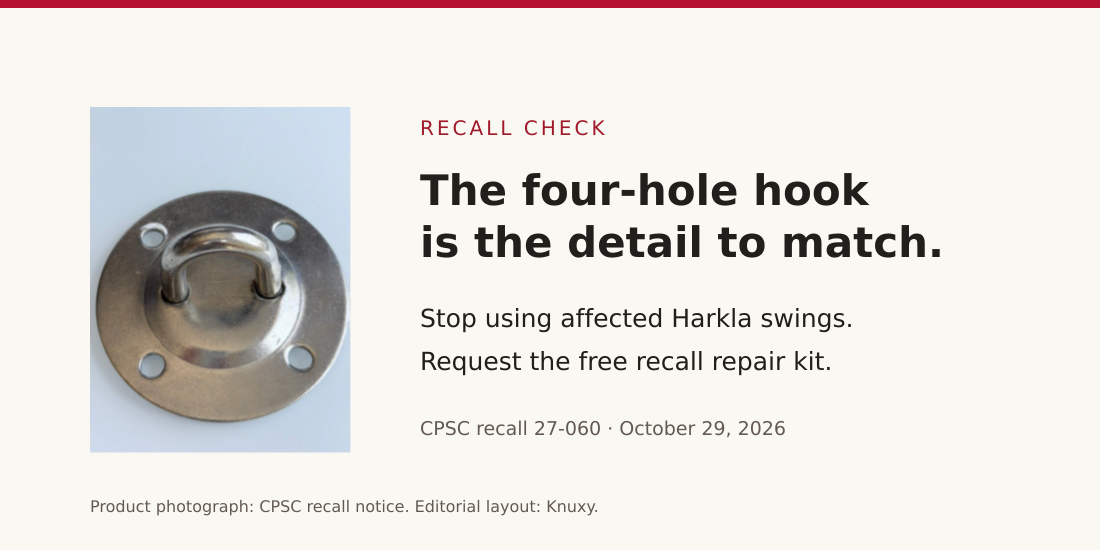
Harkla’s Sensory Swing Recall Comes Down to the Ceiling Hook
Check the mounting hardware, stop using affected swings, and request the free recall remedy through Harkla’s official page.
Food
Tractor Wheels Recall: Check Every Flavor, Not Just One Lot
FDA’s warning covers every flavor, lot and expiration date of these toddler bars. Here’s what to check and what the company says about refunds.