Lifestyle
Watching the Leonids? Plan Around Darkness, Not Just a Peak-Date Headline
NASA’s November guide and shower calendar use slightly different peak-night labels. Give yourself more than one chance, weather permitting.
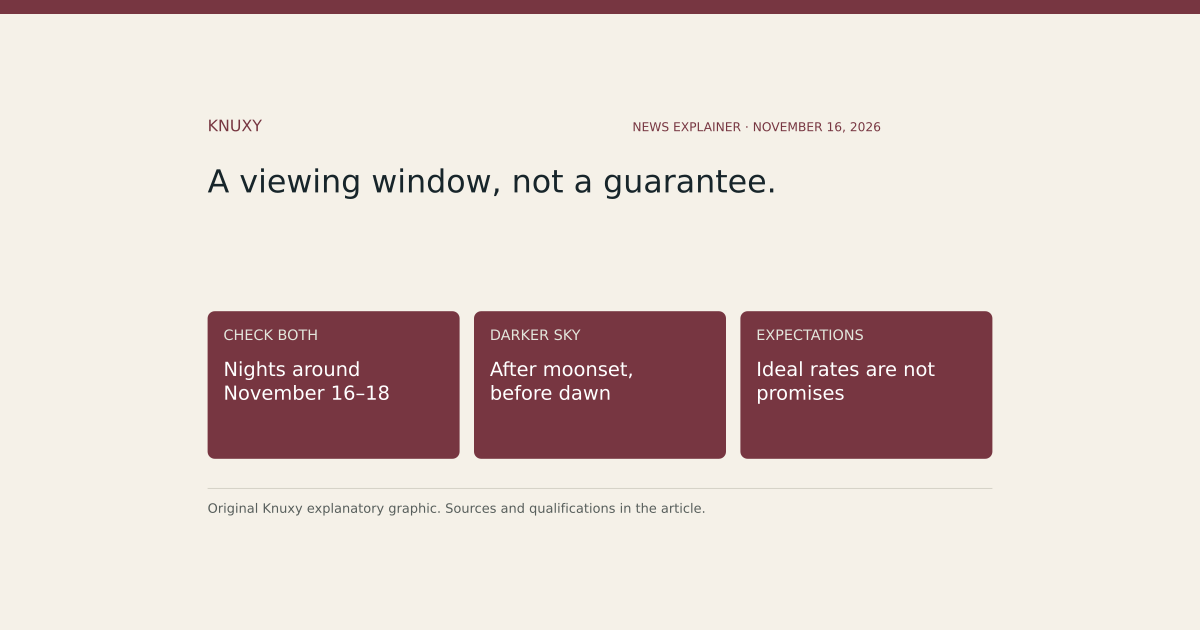
The Leonids give November skywatchers a reason to step outside, but one peak-date label is an unnecessarily brittle plan. NASA's November 2026 skywatching guide highlights November 17–18, while its shower calendar lists November 16–17. Both point to the same short midmonth viewing period. [1][2]
Rather than pretend those labels are identical, use a two-night opportunity if local weather and your schedule allow. Check the conditions before going out, and treat a cloudy night as a reason to try another window rather than evidence the shower failed to happen.
Darkness matters more than a dramatic number
The November guide recommends the hours before dawn after the Moon has set, and describes rates of up to about 15 meteors per hour under ideal conditions. That is not a promise for a backyard, a bright street or an hour spent looking intermittently between phone checks. [1]
NASA identifies comet Tempel-Tuttle as the Leonids' parent comet. Its general overview also describes the shower's history of occasional much more dramatic displays. That history is not a forecast of a meteor storm this week. [3]
Make the outing modest
Our suggestion is to plan a comfortable, manageable watch rather than build the whole night around a maximum hourly rate. A useful outing does not need a viral photograph or a particular count to qualify.
Check your local forecast and moonset time for the place you actually intend to observe. The national guide supplies the broad opportunity; those local details determine whether you get a dark, clear view. The distinction is small on a calendar and very large once you are standing outside.
Sources and editorial note
[1] NASA: November 2026 skywatching guide
[2] NASA: meteor shower calendar
Sources checked November 16, 2026. This AI-assisted briefing uses linked sources and distinguishes documented facts from editorial analysis. No firsthand interviews or product testing are claimed. The illustration is an original Knuxy explanatory graphic. Follow the linked official guidance for current recall, safety or availability details.
More to explore
Technology
Apple’s New AI Health Study Is Research, Not a Medical Verdict
The company is studying how people use AI for health questions. Participation and optional health-data sharing deserve separate decisions.
Lifestyle
Your White Christmas Forecast Needs a Reality Check
Christmas snow searches are surging. Here’s how to separate the Almanac’s prediction, NOAA’s historical odds and a useful local forecast.
Lifestyle
Your Jack-o’-Lantern Has One More Job. Check the Compost Rules First.
November 7 pumpkin smashes offer a useful second act for Halloween decorations. The catch: painted pumpkins are welcome at some sites and rejected at others.