US News
FDA’s Formula Proposal Is a Rulemaking, Not a Recall
The published proposal would change several infant-formula nutrient requirements. Comments are due March 2, 2027; it is not a feeding instruction.
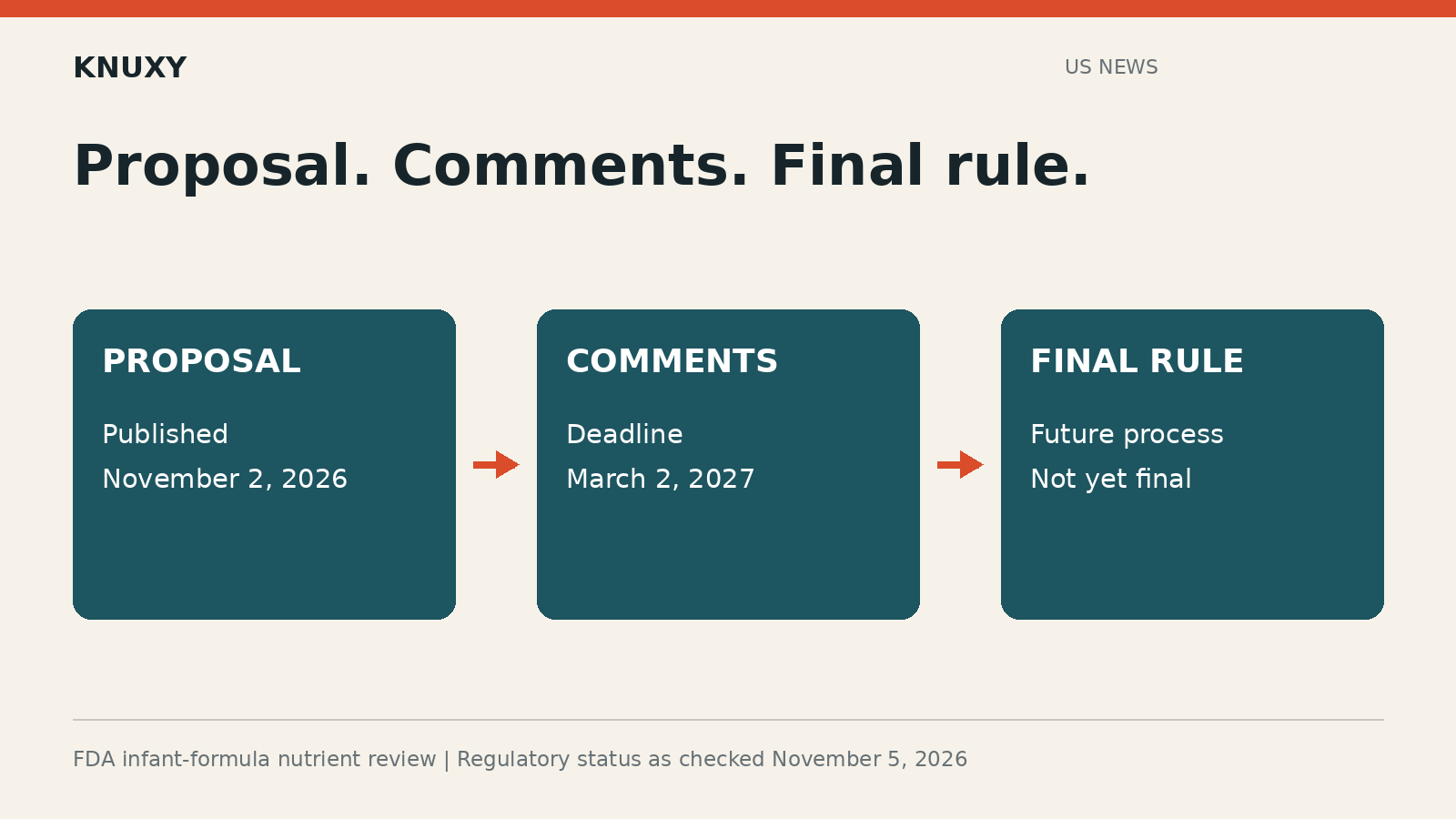
The FDA is proposing changes to infant-formula nutrient requirements, and the most useful word in that sentence is proposing. The agency announced its plan October 29; the notice published November 2 sets a March 2, 2027 comment deadline. It is a regulatory process, not a recall notice or an instruction to change what goes into a baby’s bottle today.
That distinction can disappear remarkably quickly between a government document and a wellness-flavored social post. A proposed new minimum does not establish that an individual child is deficient. A discussion of an ingredient does not make supplementation at home appropriate. Parents deserve an explanation that does not turn a review of manufacturing standards into one more source of improvised medical advice.
What is actually on the table
According to the FDA’s overview, this phase addresses eight of the 30 nutrients currently required in infant formula. The proposal would change specifications for iodine, manganese, vitamin A and vitamin D, while retaining existing levels for chloride, potassium, selenium and sodium. It also addresses certain measurement units and labeling.
The direction is not simply “more nutrients.” For example, the agency proposes increasing vitamin D requirements while narrowing or lowering some other specifications. Its overview also seeks input on ingredients commonly added but not presently required, including DHA, ARA and L-carnitine. A longer ingredient list is therefore a poor substitute for reading what a particular change is intended to do. The proposed changes are listed here.
Nor is this the entire review. The FDA describes three phases and an intention to consolidate final changes into one comprehensive final rule. The notice does not mean that a completed, comprehensive standard has already taken effect. Treat a headline claiming an immediate overhaul of every formula product as a reason to open the underlying document.
The deadline and docket are now clear
The published notice identifies docket FDA-2026-N-10832 and states that comments must be submitted by March 2, 2027. It explains electronic and written submission procedures. Earlier agency materials displayed an inconsistent docket number; the published notice is the reference used here for the deadline and submission instructions.
Public comments are not private messages to a pediatrician. The notice explains that electronically submitted comments and attachments are posted publicly, and provides a separate procedure for confidential submissions. Anyone contributing a family experience should read those instructions before including identifying or medical information. A useful comment can describe a practical labeling problem or point to evidence without publishing a child’s history.
When following the process, keep three dates separate: the announcement, the public-comment deadline and any future effective or compliance date. None should be substituted for another in a shopping recommendation or social-media warning.
What families should do with this information
Keep the regulatory story separate from preparation instructions. The FDA’s current formula-safety guidance says to follow the product label and use the specified amounts when mixing formula. Ready-to-feed formula should not have water added. A proposal about manufacturers’ nutrient specifications provides no basis for changing those directions at home.
If a family has questions about feeding, a child’s growth, or a medically necessary formula, those are questions for its healthcare professional. This article evaluates the status of a proposal; it does not recommend a brand, diagnose a nutrient problem, or offer an individualized feeding plan.
The consumer issue to watch is how an eventual rule handles evidence, understandable labels and implementation. A manufacturer may need time to reformulate; a parent needs clear instructions at the moment of use. Those needs are compatible only when the communication is precise. The FDA’s proposal deserves scrutiny, public participation and careful coverage. It does not need an extra layer of panic packaged as a shopping recommendation.
More to explore
US News
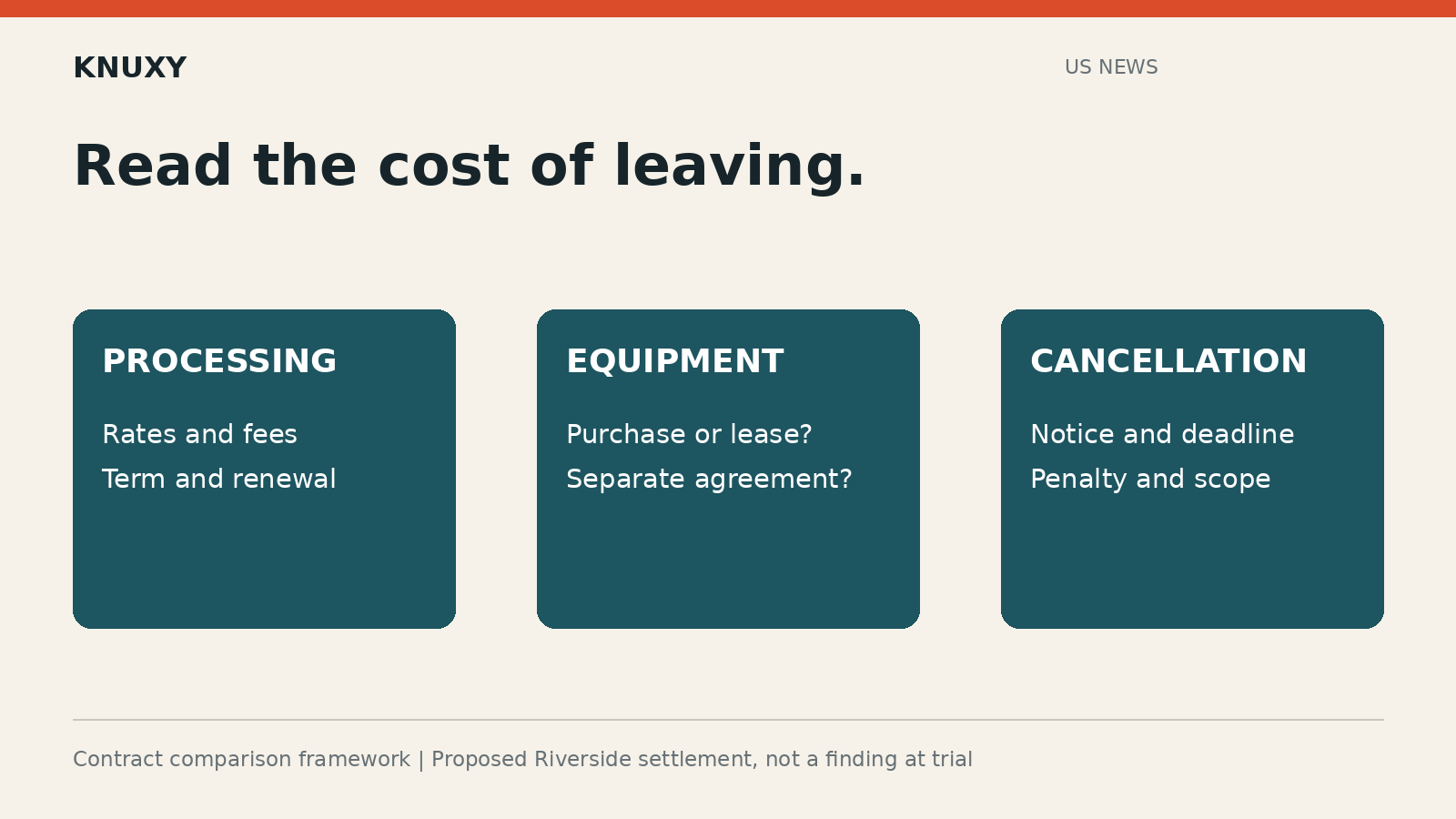
The Payment-Processing Deal That Made Leaving the Expensive Part
A proposed FTC and Washington settlement targets alleged savings and cancellation deception. Here is what small businesses should check.
US News
Sunset Park’s Deadly Fire: What Is Known, and What Still Isn’t
Six deaths were reported after a Brooklyn house fire. Investigators have not established its cause; practical fire-safety checks remain urgent.
Sports
Celtics Fall in Houston: Start With the Fast-Break Gap
Boston’s winning streak ended in Houston. The box score offers useful questions about transition defense—and a warning about adding up overlapping statistics.