
Food
Spatchcock Turkey: A Flatter Roast for Crisp Skin and Easier Timing
Flatten a fully thawed turkey, season it with herb butter and roast it on a wide rack. Temperature checks keep the shorter cooking time honest.
Jump to recipe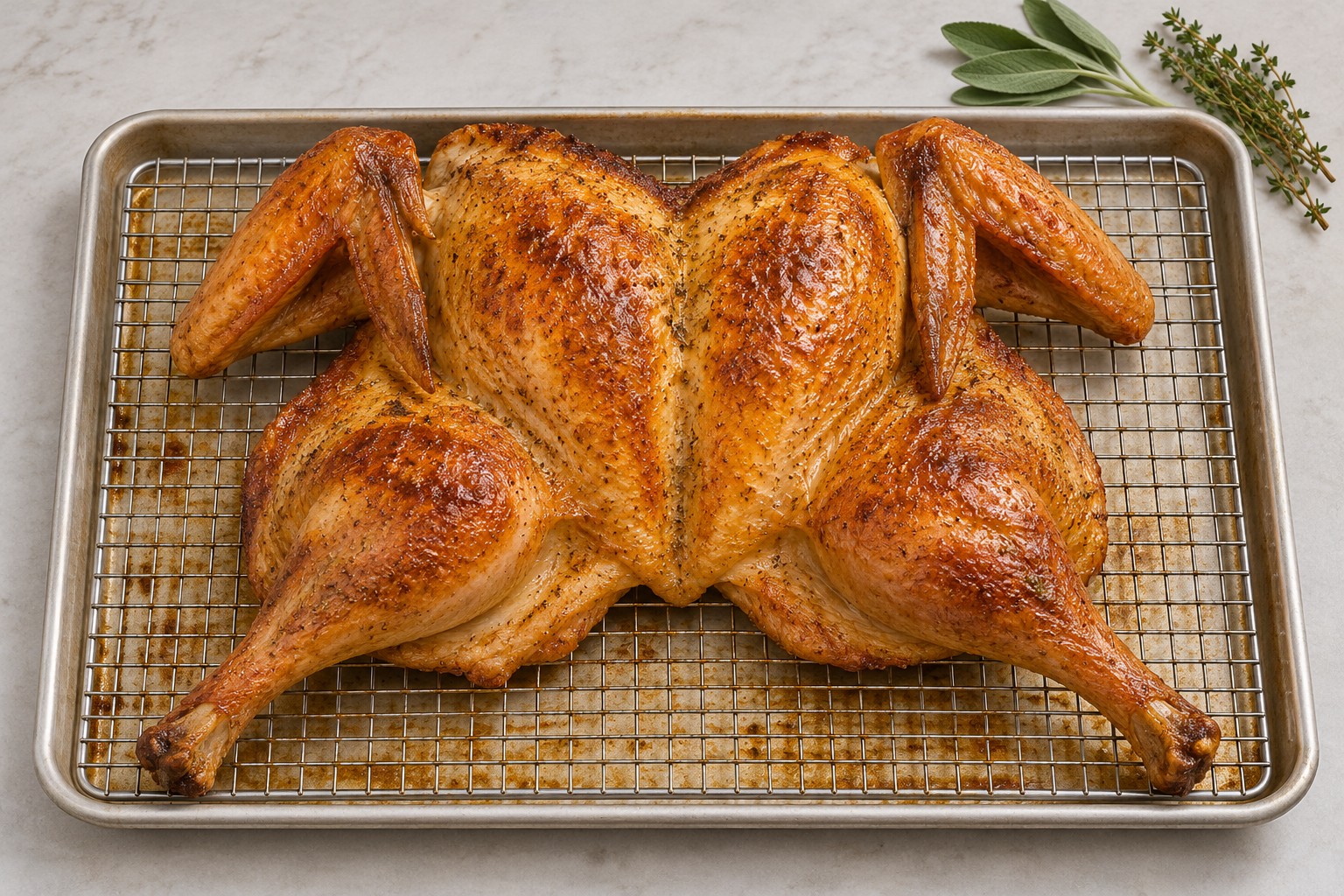
Spatchcocking removes the backbone so a turkey opens out and sits flatter in the oven. More skin faces upward, the legs are no longer tucked close to the body, and the breast and dark meat roast in a more even arrangement. The result is an appealing alternative to the upright holiday centerpiece.
The tradeoff is width. Before cutting the bird, check that your pan, rack and oven can accommodate it. A deep V-shaped roasting rack is designed to cradle a whole bird; a broad flat rack is the better fit here. Keep every part over a rimmed pan so fat and juices cannot drip onto the oven floor.
Let the butcher do the difficult part if you prefer
Ask for a fully butterflied turkey with its backbone removed and the breast flattened, and request the backbone back for stock. Doing this ahead can make roasting day much simpler. At home, use heavy poultry shears on a stable board. If the bones defeat the shears, stop rather than force a kitchen knife through them.
Keep the bird cold until you begin, do not rinse it, and clean and sanitize surfaces and tools after raw-poultry preparation. Use a separate clean board for the cooked turkey.
Follow the bird's shape and temperature
The recipe below uses a 12–14-pound turkey and a 400°F oven. The flatter shape often shortens roasting, but weight alone cannot predict the finish. Begin checking around 70 minutes and use a thermometer in several places. The breast and innermost thigh and wing must all reach at least 165°F; follow any higher instructions for the particular product.
For a pre-brined or enhanced bird, omit the recipe's added salt. Herb butter and pepper still give you flavor. If one patch of skin gets dark early, shield that patch loosely with foil while the meat finishes.
Use the resting interval well
Rest the cooked turkey for about 20 minutes on a clean board. Meanwhile, turn the juices into gravy from the drippings. The backbone is useful for a separate stock, but it does not need to be in the roasting pan beneath the bird.
For choosing a turkey, safe defrosting, Butterball seasoning and foil tenting, see the complete roast-turkey guide. If a compact white-meat roast better suits your table, try the herb-butter roulade.
The recipe is a practical editorial method rather than a claim of a completed Knuxy kitchen test. Its timing is a planning allowance; the thermometer decides the endpoint.
Spatchcock Turkey: A Flatter Roast for Crisp Skin and Easier Timing
- Prep
- 30 minutes
- Cook
- 100 minutes
- Total
- 150 minutes
- Servings
- 8
Ingredient quantities scale with servings. Cooking times, temperatures, and equipment stay as written.
Equipment
- Heavy poultry shears or butcher-prepared turkey
- Large stable cutting board
- Wide rimmed sheet pan and flat oven-safe rack
- Instant-read thermometer
- Oven mitts
Ingredients
Instructions
Prepare the pan and turkey
Heat the oven to 400°F. Fit a flat oven-safe rack inside a wide rimmed sheet pan. Check that the flattened turkey will fit entirely over the rimmed pan with room for airflow; use a larger pan if needed. Remove neck and giblets and pat the turkey dry without washing.
400°F
Remove the backbone
Put the turkey breast-side down on a stable board. With heavy poultry shears, cut down each side of the backbone and remove it. Turn breast-side up and press firmly over the breastbone until flattened. If the shears struggle, stop and have a butcher prepare it; do not force a knife through the backbone.
Season
Mix the softened butter, thyme, garlic and pepper. Loosen the breast skin gently and spread the butter beneath it. Rub the exterior with oil. Add the measured salt only if the bird is unseasoned and has not been brined. Place skin-side up on the rack, arranging legs to the sides and tucking wing tips underneath.
Roast and check
Roast at 400°F, beginning temperature checks around 70 minutes. A 12–14 lb bird may take about 80–100 minutes, but continue until the thickest breast and innermost thigh and wing each measure at least 165°F without touching bone. Shield any darkening patches loosely with foil. Follow higher product-specific directions if applicable.
165°F minimum in breast, thigh and wing · 100 minutes
Rest and carve
Transfer to a clean board and rest about 20 minutes. Separate the legs and thighs, lift the breast lobes from the bone and slice across the grain. Save cooked pan and board juices for gravy.
20 minutes
Notes
Time estimate assumes a fully thawed 12–14 lb bird and excludes defrosting or optional brining. Total time includes a 20-minute rest. This is an editorial method, not a claimed Knuxy kitchen test. Keep raw poultry refrigerated until preparation; refrigerate leftovers promptly within the safe holding window.
More to explore
Food
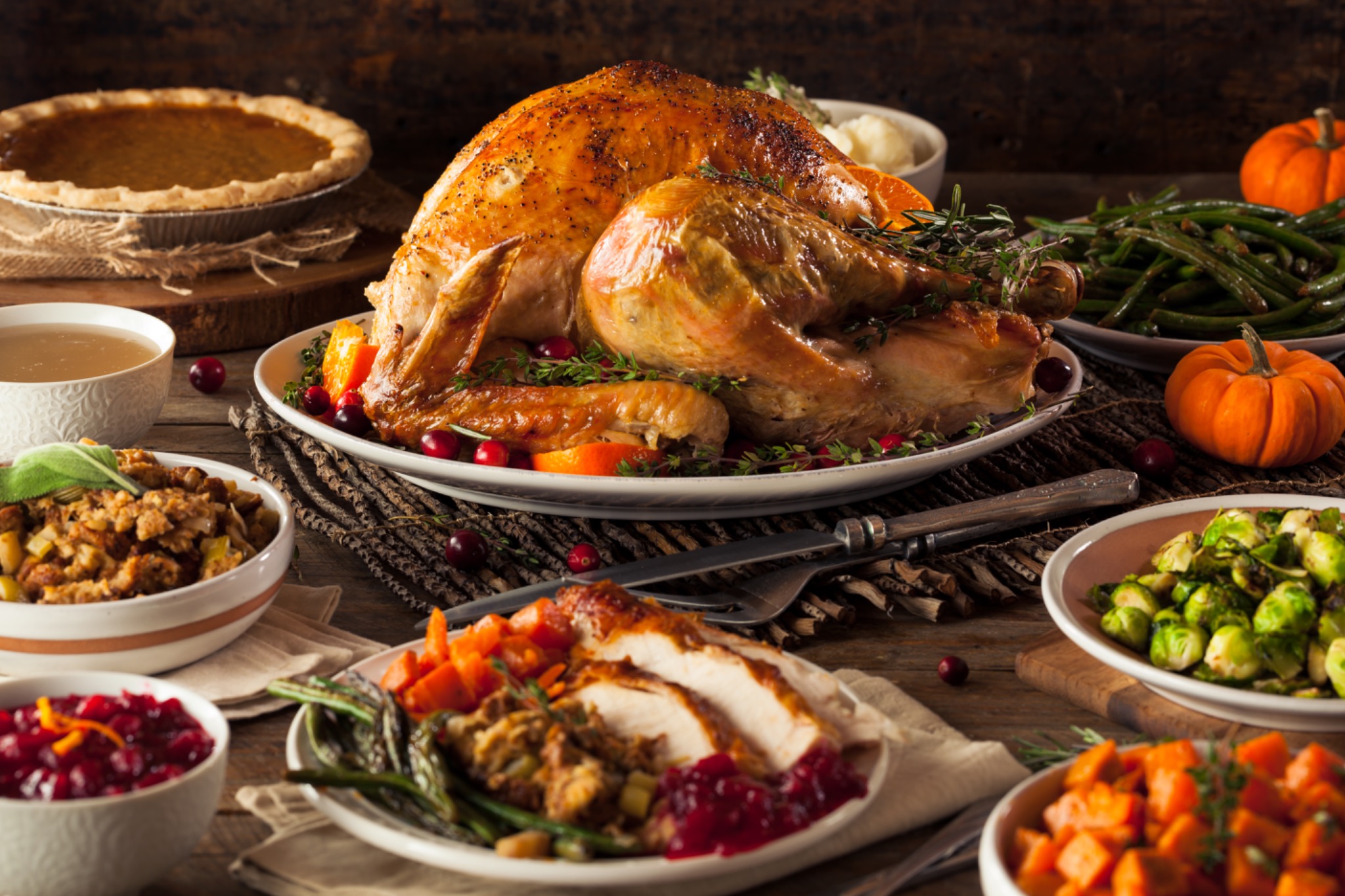
How to Roast a Perfect Turkey: Crisp Skin, Juicy Meat and Good Gravy
Choose the right bird, plan the thaw, decide whether to brine, and roast with confidence—plus foil tenting, resting and gravy from the drippings.
Food
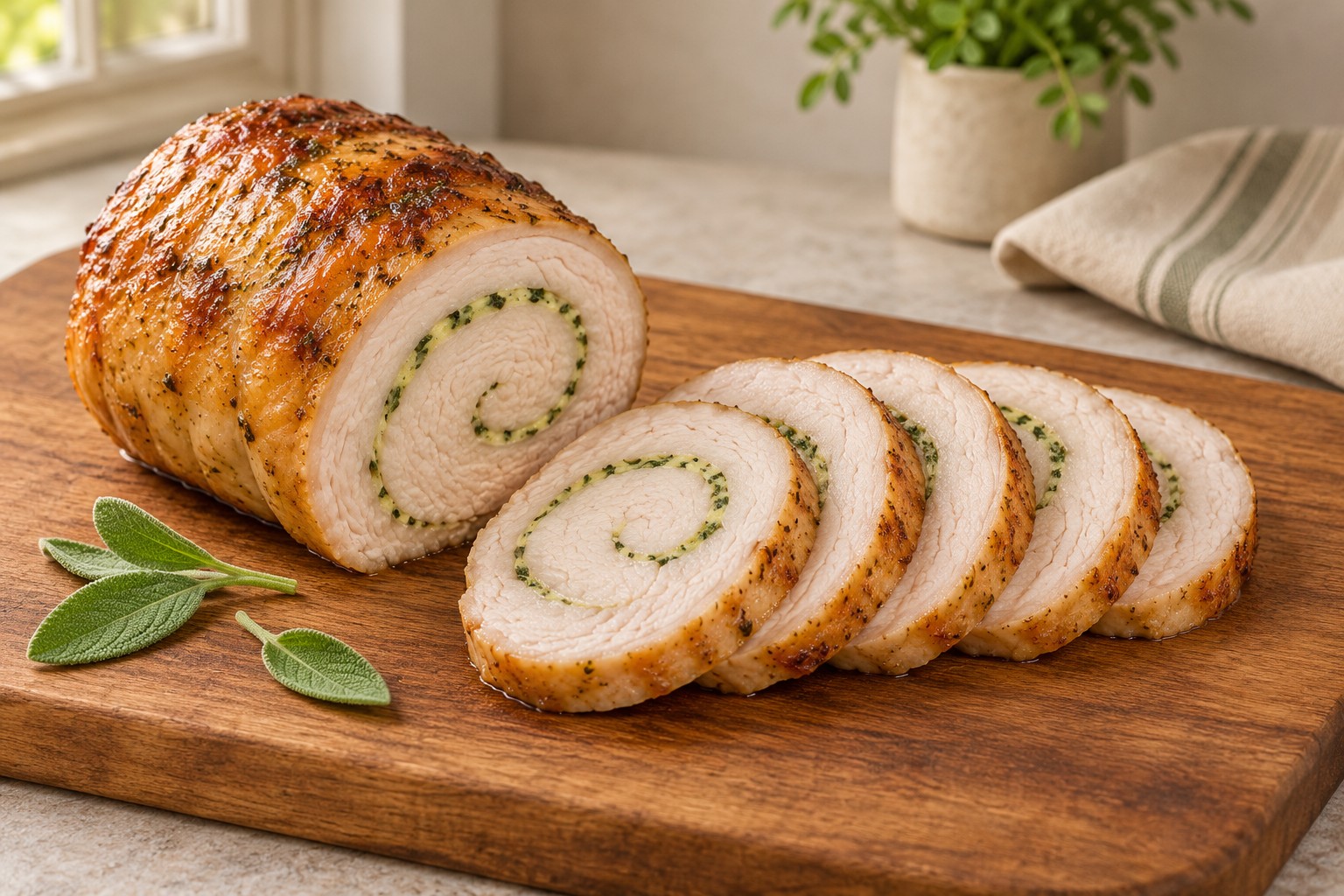
Herb-Butter Turkey Roulade for a Smaller Thanksgiving Table
A boneless breast rolled with sage, parsley and lemon makes tidy slices and a manageable roast. Ask the butcher to do the boning and butterflying.
Food
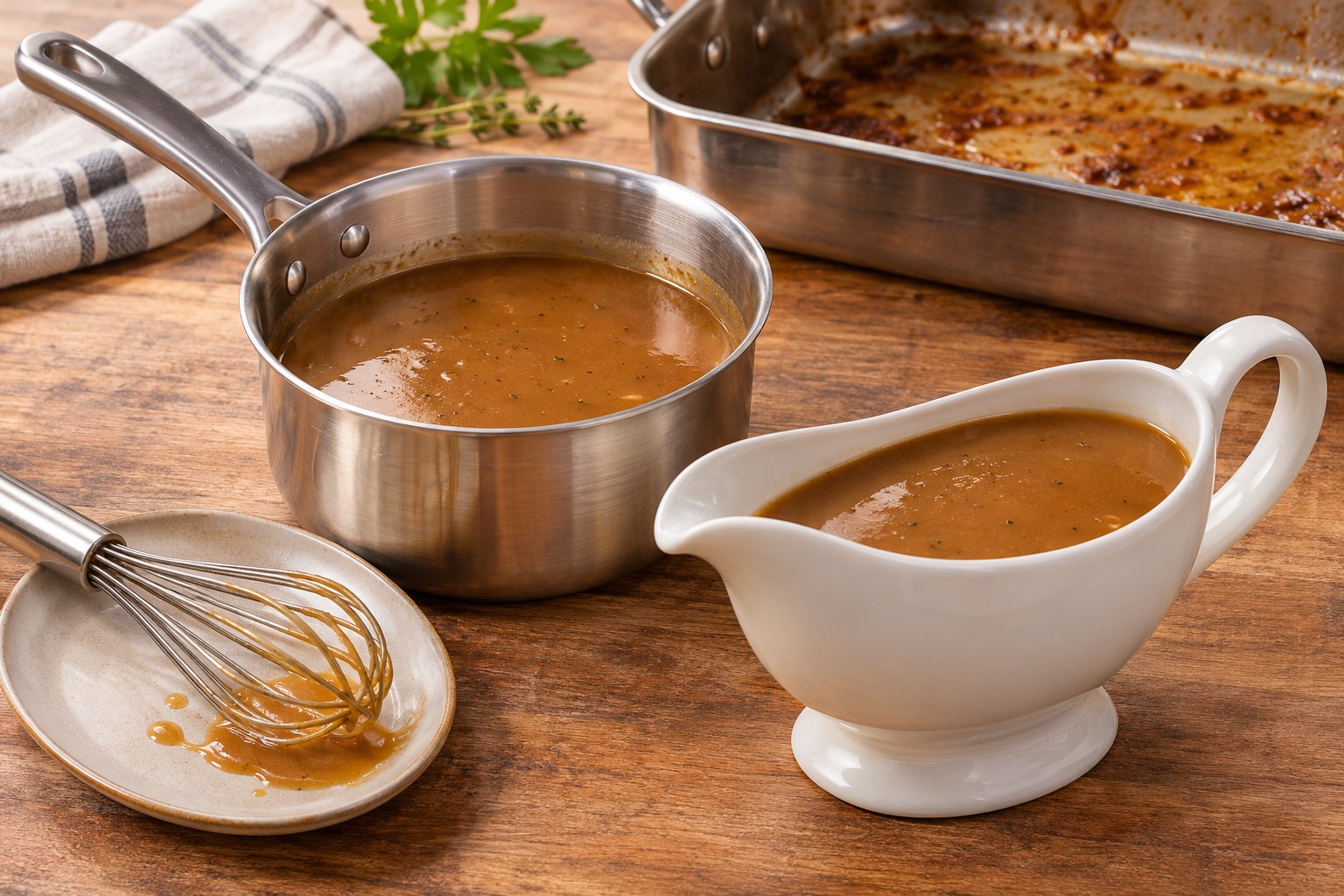
Turkey Gravy from the Drippings: Smooth, Savory and Properly Seasoned
Separate the fat, loosen the browned bits and whisk a simple roux. Taste cooked drippings before adding salt—especially with a pre-brined bird.